Betagro joins hands with Kasetsart University and the Department of National Parks, Wildlife and Plant Conservation to implement the Jungle Fowl Conservation and Breeding Project
The project aims at preserving genetic sources
and creating food security
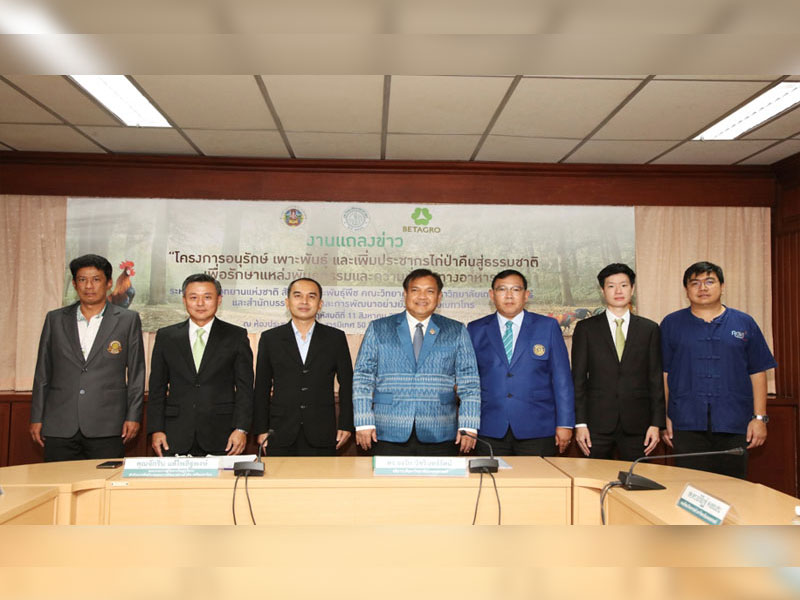
Betagro Public Company Limited in cooperation with Kasetsart University and the Department of National Parks, Wildlife and Plant Conservation jointly carry on Her Majesty Queen Sirikit The Queen Mother’s wish to promote the breeding of jungle fowls and release them back to nature for communities’ food storage and food stability. Under this initiative, the three parties will implement the Jungle Fowl Conservation and Breeding Project in order to preserve genetic sources and create food security.
Presided at the press conference to announce this project were Mr. Jakkrin Taepaisitpong, Executive Vice President-Governance & Sustainable Development Office; Dr. Jongrak Watcharinrat, President of Kasetsart University; and Acting Sub Lt. Verasak Wongsong, representative of the Director General, Department of National Parks, Wildlife and Plant Conservation. The event was held at the 50-year Saranites Building, Kasetsart University.

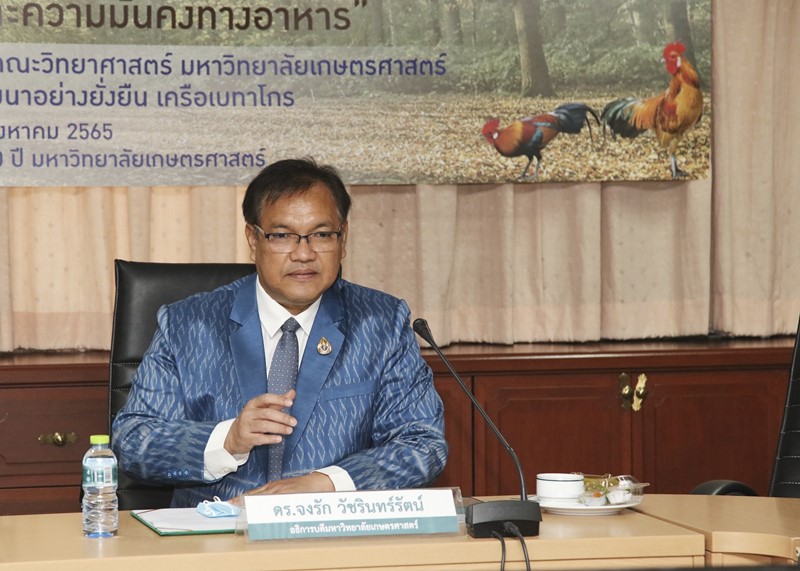

This joint project to conserve, breed and increase the population of jungle fowls in order to preserve their genetic sources and create food security is a result of cooperation among the 3 parties. The objectives are to boost the number of jungle fowls whose genetic sources are investigated by using genomics technology before releasing them back to nature to create food stability and food storage for communities.
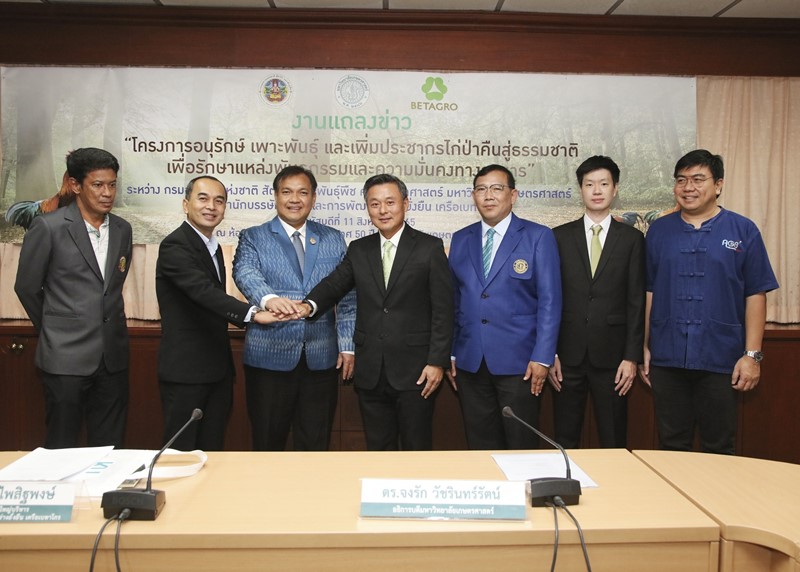
The Faculty of Science, Kasetsart University and Betagro’s Corporate Governance and Sustainable Development Office have signed a memorandum of understanding to jointly implement a project to conserve, breed and increase the population of jungle fowls, native and local chickens for communities’ food security. It will also promote biodiversity conservation, biological resources and nature’s ecosystem, all of which are the foundation for social and economic development particularly communities’ food stability. In addition, the project will support academic development, human resources, research, innovation, genetic technology of jungle fowls, native and local chickens, and dissemination of knowledge to the public in general.