Betagro Commits to Sustainability with ‘BETAGRO Saijai Protect Forest Community’ Project Addressing PM2.5 Air Pollution and Community Well-Being

Bangkok – 18 August 2025 – Betagro Public Company Limited (BTG), a leading integrated food company in Thailand, reaffirms its leadership role in food sustainability by launching the flagship project ‘BETAGRO Saijai Protects Forest Community.’ The key initiative provides wildfire protection equipment worth THB 5.5 million across 10 communities forests in 7 high-risk provinces, addressing the root causes of wildfires and PM2.5 air pollution. This project also promotes the biodiversity conservation in community forest ecosystems – home to diverse native plants and wildlife – through collaborative efforts among the government sector, private sector, and local communities.
‘BETAGRO Saijai’ icon
The 'BETAGRO Saijai Protect Forest Community’ project is driven by ‘BETAGRO Saijai’ concept, which reflects Betagro’s long-term commitment to food sustainability. It aligns with the company’s strategic sustainability framework, focusing on 5 key areas: Food Quality and Safety, Climate Change Management, Sustainable Packaging, Occupational Health and Safety to improve the quality of life of employees, and Community Development to encourage engagement and collective growth.
Mr. Paitoon Jiranantarat, Chief Operation Development & Supply Chain Officer stated that “Recognizing the impact of PM2.5 air pollution on people’s long-term health, Betagro has launched ‘BETAGRO Saijai Protect Forest Community’ project, in partnership with the government sector, private sector, and local communities supported by the Board of Investment of Thailand (BOI) to empower communities in addressing the effects of wildfires efficiently. Through this initiative, we provide essential wildfire protection equipment, including fire-extinguishing blowers, portable fire-fighting water tanks, full-operation kits, and more, covering all 10 community forests in 7 provinces, where there is a high risk of wildfires and PM2.5 air pollution.”
10 community forests in 7 provinces include:
- Lamphun: Ban Pa Dam and Ban Dong Huai Yen community forest
- Pitsanulok: Ban Sri Charoen and Ban Pa Daeng community forest
- Saraburi: Khao Noei Jom Sawan community forest
- Lopburi: Ban Khao Salat Dai community forest
- Prachin Buri: Ban Non Klang community forest
- Maha Sarakham: Ban Kok Keum Chad community forest
- Nakhon Ratchasrima: Nong Bun Mak community forest
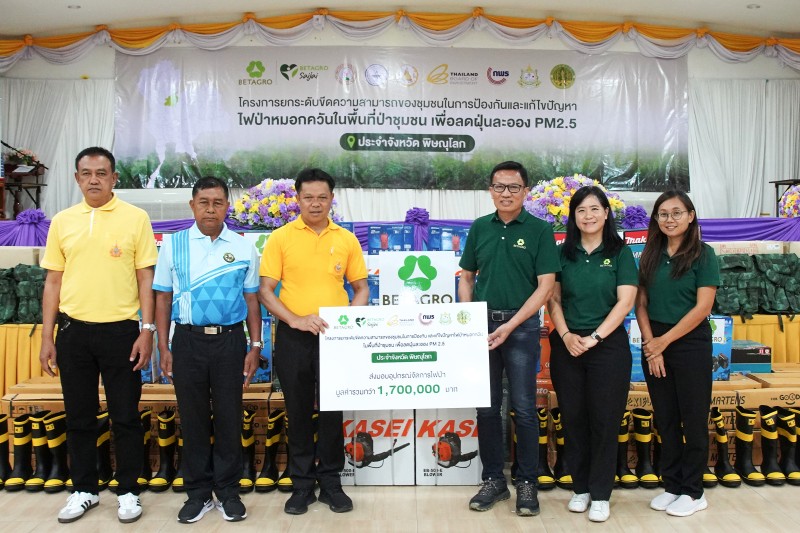
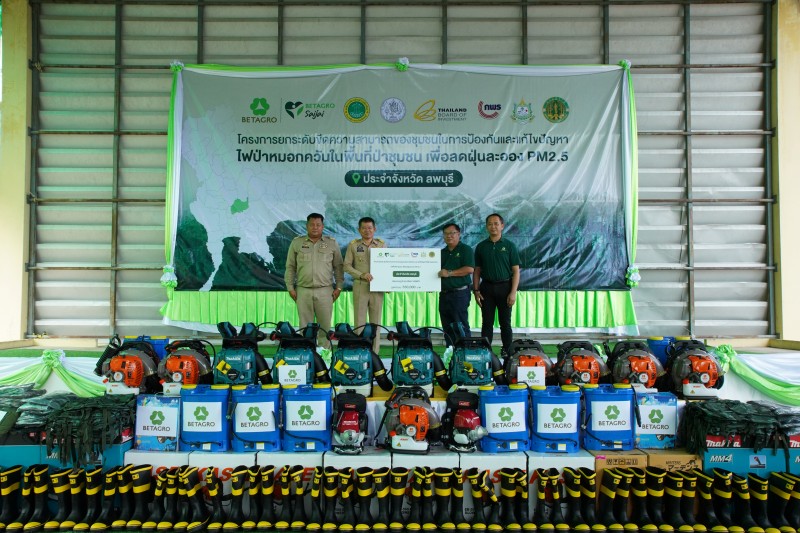
Betagro donated essential wildfire protection equipment
such as fire-extinguishing blowers, portable fire-fighting water tanks, full operation kits, and more.
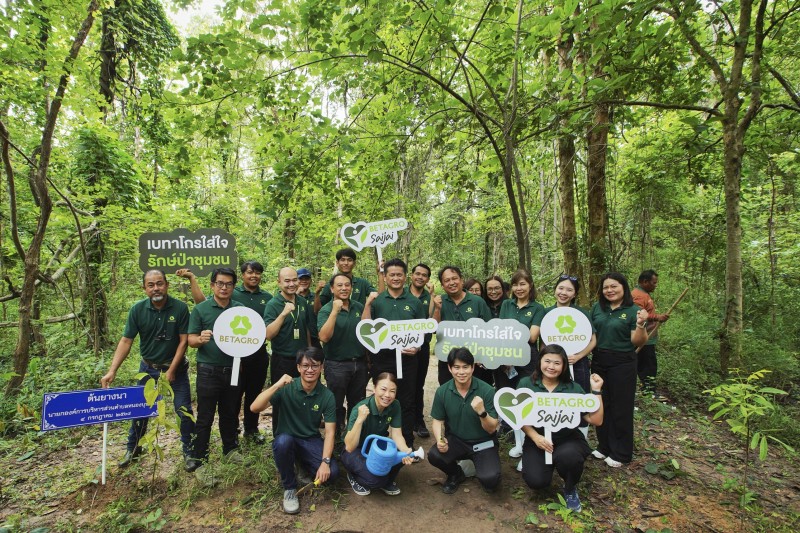
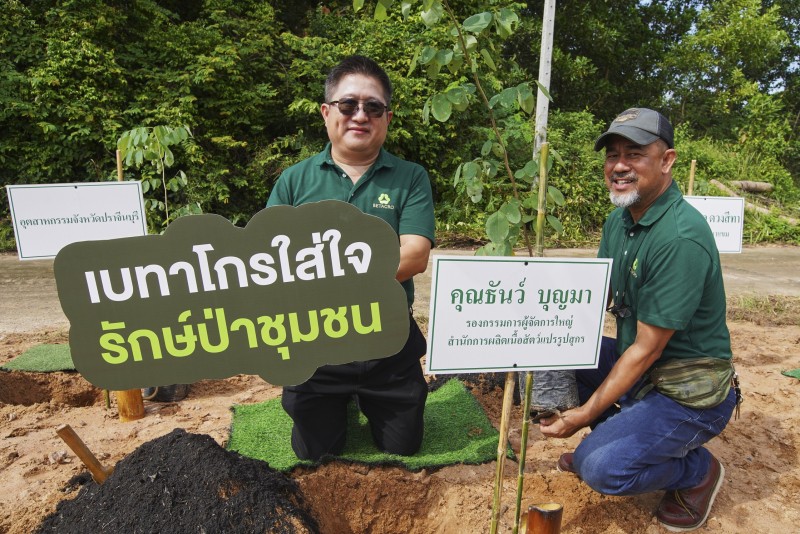
Betagro employees and communities participated in planting trees at community forests
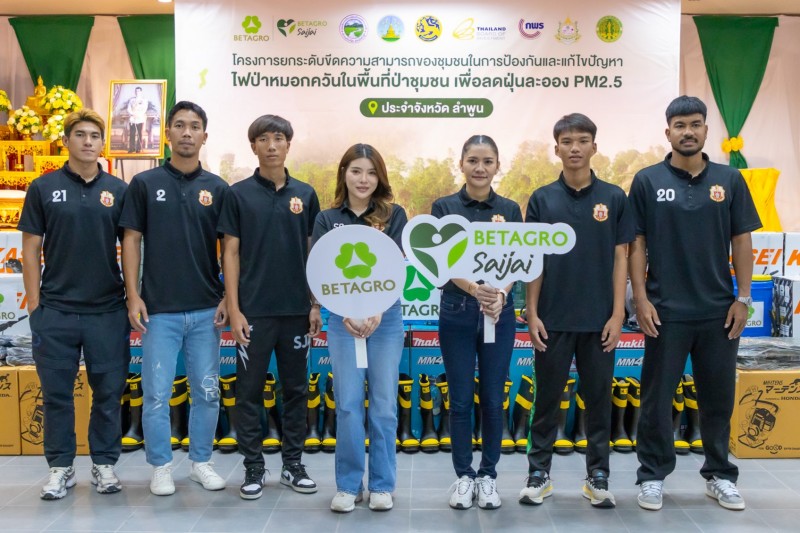
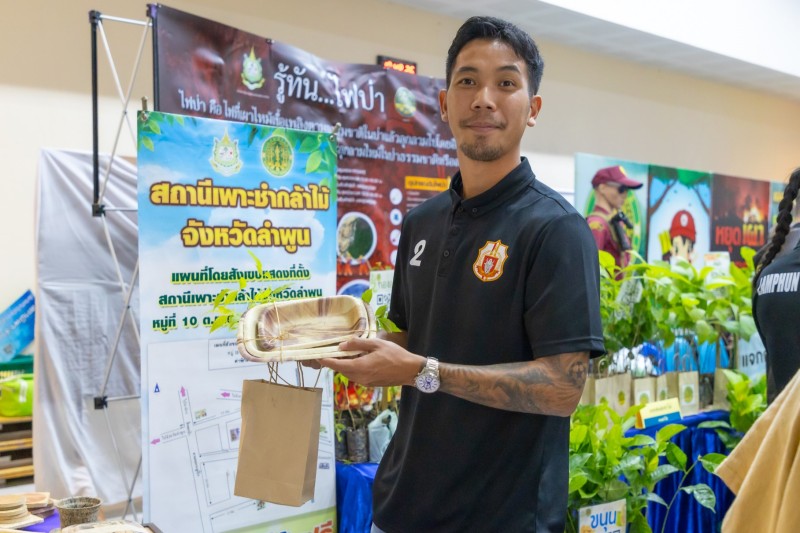
Betagro and Lamphun Warrior Football Club engaged communities in the sustainability project.
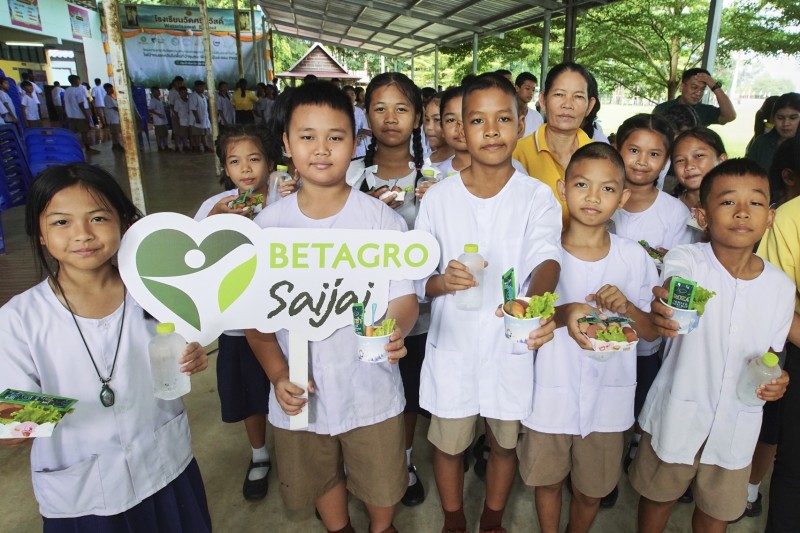
Betagro provided 'Better Food' for children in communities.
In addition, Betagro is dedicated to encouraging community engagement in sustainable forest conservation and improving the quality of life in communities through various impactful projects, including:
- The 'Community Forest Seminar' Project: This collaborative forum brings together the government sector, private sector, and local communities to manage forest areas based on the specific needs of each area, while also supporting ecosystem restoration and biodiversity conservation.
- The Occupational Development Project for People with Disabilities: Betagro offers upskilling programs in over nine areas and is committed to hiring more than 67 people with disabilities. For example, the "Vegetable Planting Model by People with Disabilities project” which uses smartphone-based controls, was developed by Betagro in collaboration with King Mongkut's University of Technology Thonburi (KMUTT) and Ban Nong Nok Krarian Subdistrict Health Promotion Hospital.
- The 'Community Products to Farms and Factories Project’: Betagro supports local communities by buying their products, such as vegetables, fruits, and processed goods for its farm and plant employees, generating more than THB3.26 million in revenue for communities.
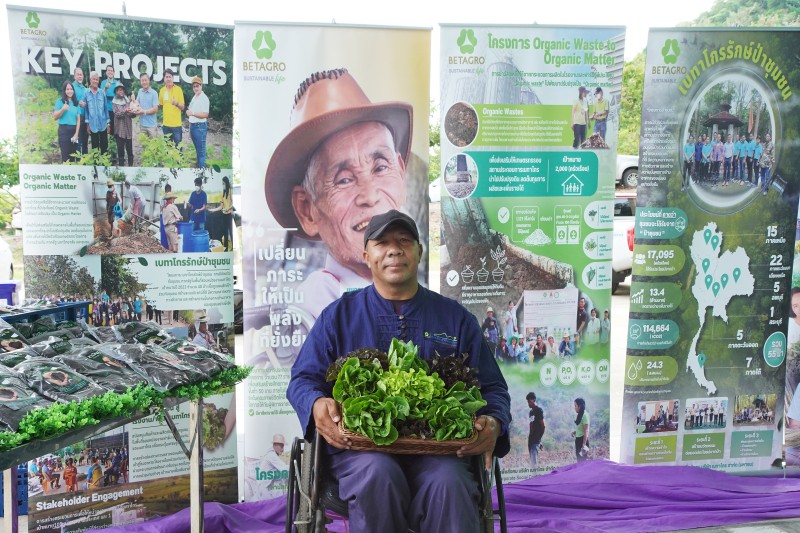
The Vegetable Planting Model by People with Disabilities project
is operated using smartphone controls.
“At Betagro, achieving true sustainability requires collaboration from all stakeholders – community members, organizations, and individuals in each area. We believe working together leads to better and more lasting results than working alone. Betagro continues to strengthen Thailand’s food industry while promoting balanced growth across economic, social, and environmental dimensions. As a leading integrated food company in Thailand, we remain committed to delivering better food for a sustainable life.” Mr. Paitoon added.